
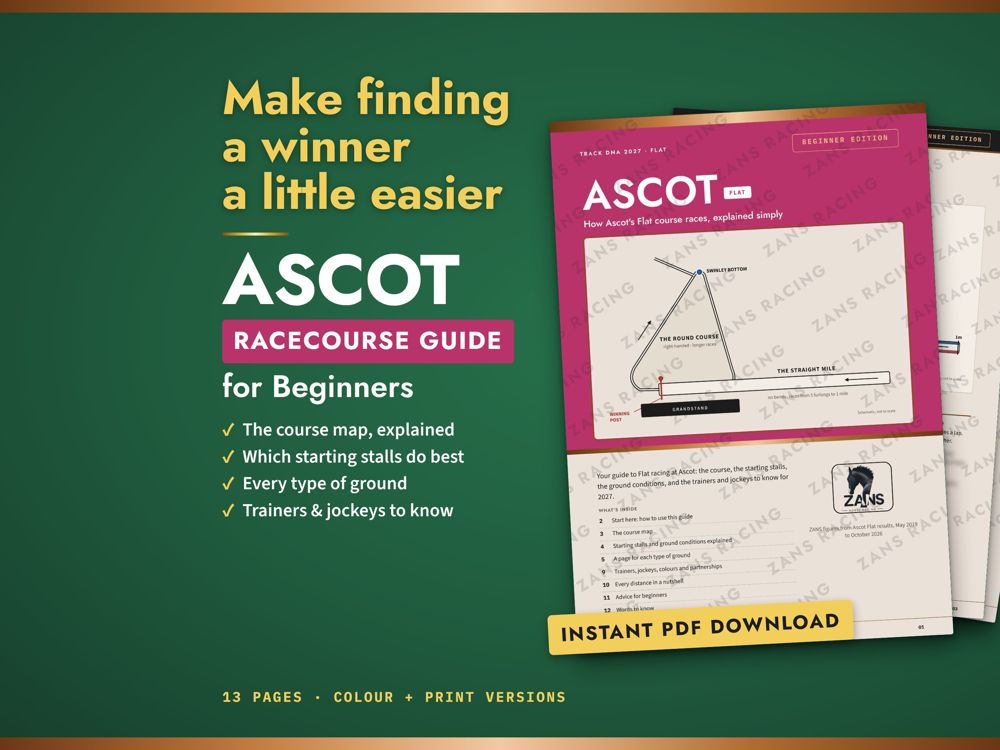
Ascot Flat · Beginner Edition
13 pages · colour + print versions
New to racing, or new to Ascot. Plain words, no jargon.
- The course map, explained
- Which starting stalls do best
- Every type of ground
- Trainers and jockeys to know







Home › Ascot Racecourse Guide
The ZANS Ascot racecourse guide explains Flat racing at Ascot course by course: the course map, the draw by trip and field size, the going, and the jockeys and trainers who do best there. Three editions, instant PDF.
13 pages · colour + print versions
New to racing, or new to Ascot. Plain words, no jargon.

37 pages · colour + print versions
You know the basics and want the detail behind the draw and the going.

71 pages · colour + print versions
You study form seriously and want every number, with its limits.
Five, six and seven furlong races and one of the two mile starts use the straight course; 1m2f, 1m4f, 1m6f and 2m races go right-handed round the course, past Swinley Bottom, into a short rising straight of about 2½ furlongs. Every edition opens with a ZANS-drawn course map showing where each distance starts.
Read the free summary: Ascot draw bias explained. Which starting stalls have done best at each distance, worked out from Ascot Flat results since 2019, with sample sizes so you can see how much each figure is worth.
New to the going? Read going (ground conditions) explained. How Ascot rides on good to firm, good, soft and heavy ground, and how the draw picture shifts when the going changes.
The jockeys and trainers with the best Ascot records, shown with their racing colours.
Recent winners of the big Ascot races, each shown in its own colours.
Beginner (bronze, 13 pages) in plain words; Advanced (silver, 37 pages) for draw, ground and field size in depth; Pro (gold, 71 pages) for every number, with its limits.